

There are artists whose work I admire, and then there are artists who give me permission to see the world differently.
Friedensreich Hundertwasser is one of the latter.
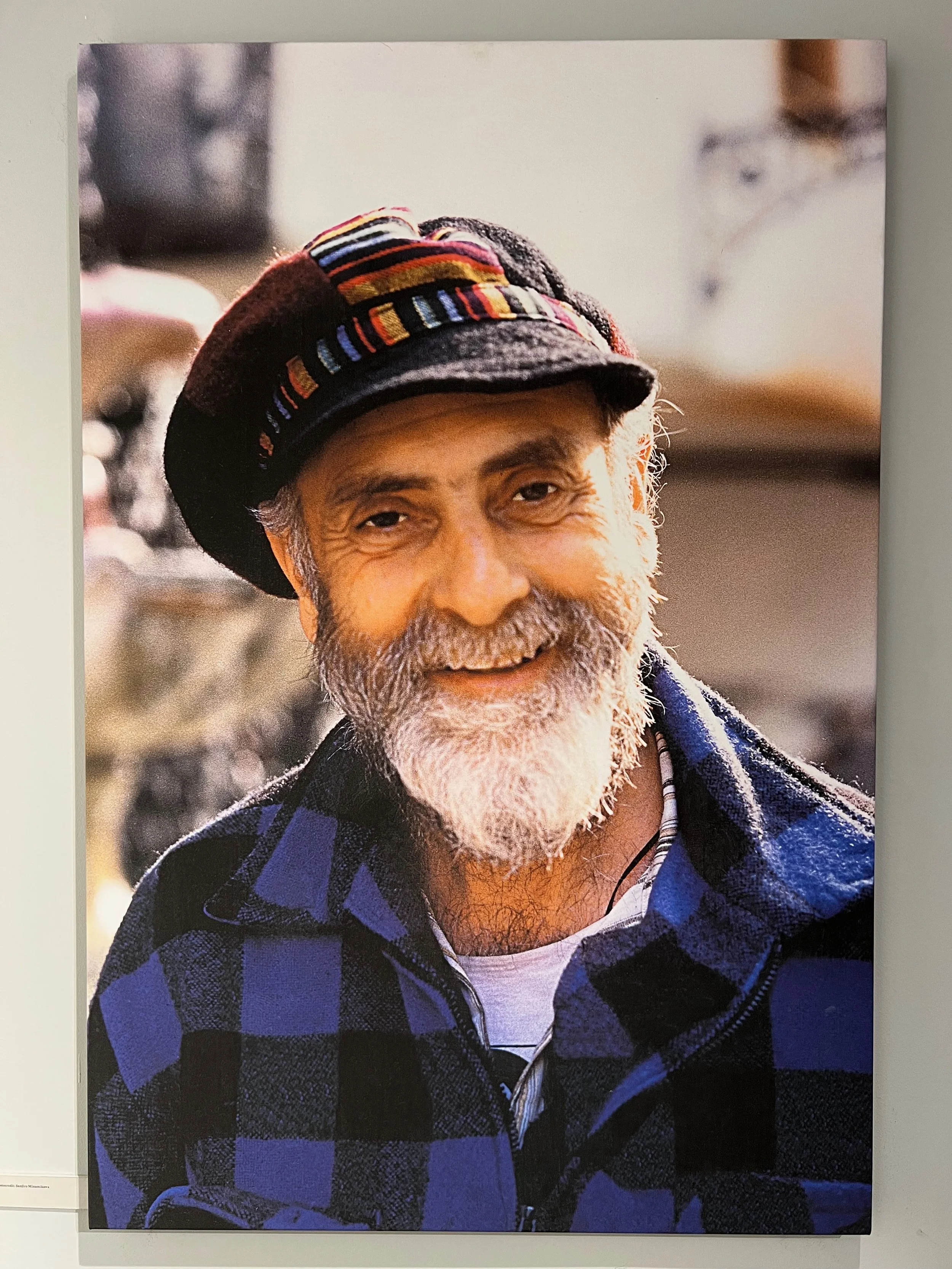
Friedensreich Hundertwasser
I am drawn first to the sheer exuberance of Hundertwasser’s work—the vivid colors, organic shapes, spirals, unexpected lines, and playful compositions. His paintings seem to refuse straight lines and quiet obedience. They feel alive, as though they are growing rather than being constructed.
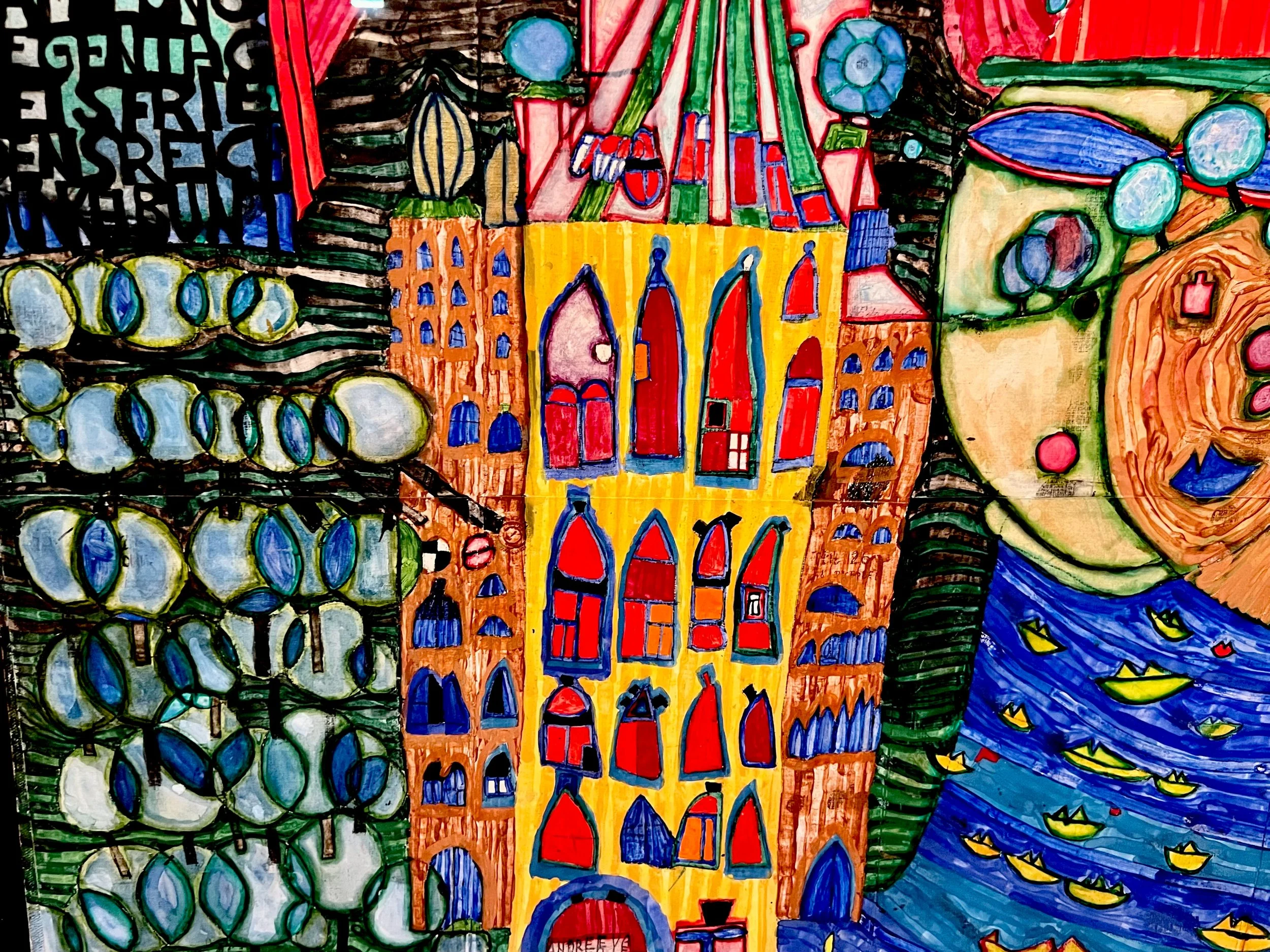
“Das 30 Tage Fax Bild,” Friedensreich Hundertwasser
His titles add another layer of imagination: Good Morning City—Bleeding Town, Peace Treaty with Nature, Waiting Houses. Even the words seem to open little doors into another way of seeing.
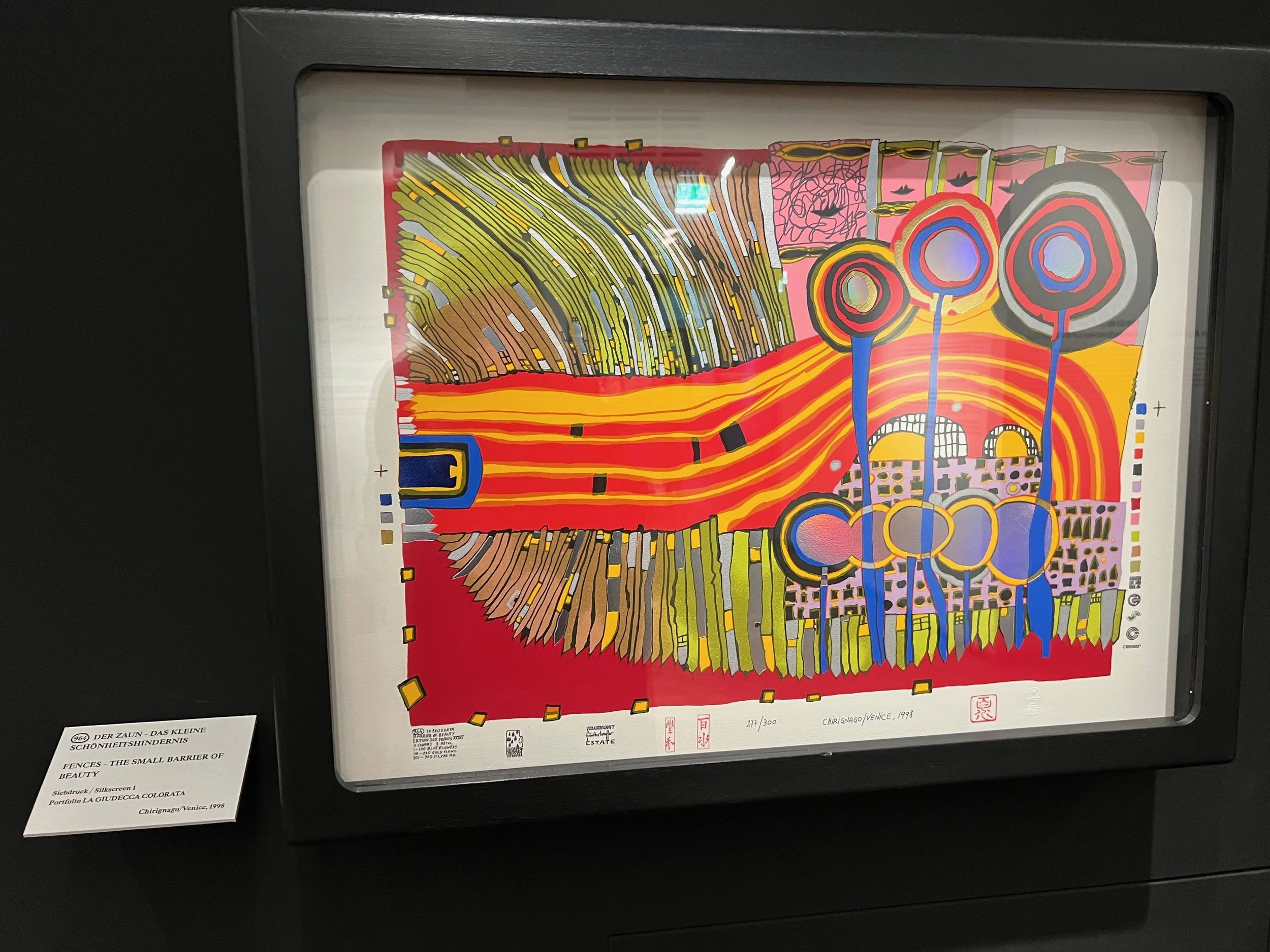
“Fences-The Small Barrier of Beauty,” Friedensreich Hundertwasser
Last year, I had the opportunity to visit Hundertwasser’s KunstHausWien in Vienna, and the experience was unforgettable. I had long loved his bright palette, wandering lines, quirky faces and objects, and joyful disregard for convention. But seeing so much of his work together, and stepping into the world he imagined, was something entirely different.
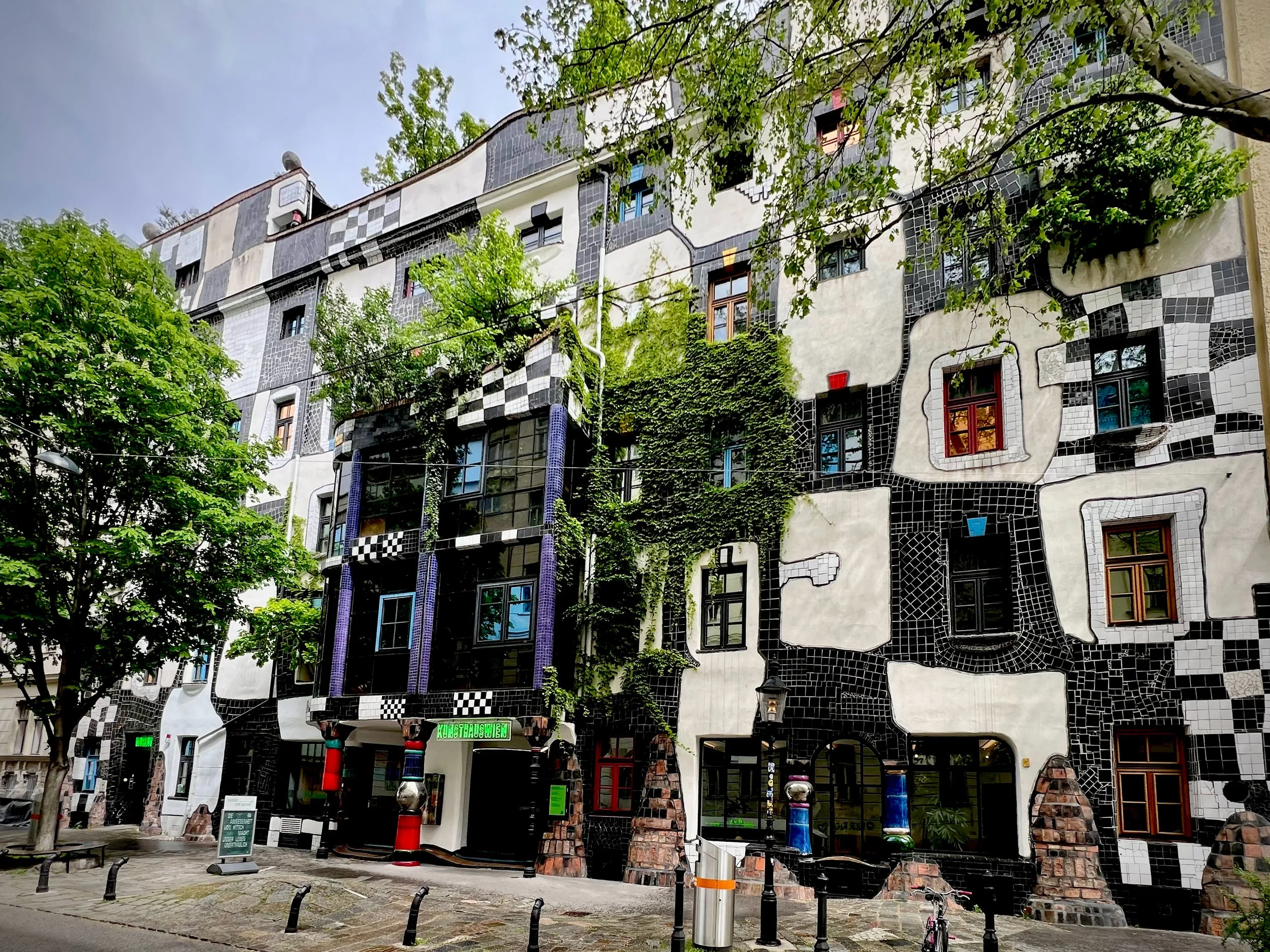
Hundertwasser’s KunstHausWien in Vienna
I spent hours wandering through his paintings and prints, discovering layers of color, pattern, and invention. I even had the chance to see his small personal apartment above the museum, nestled in a lovely rooftop garden. Standing there felt strangely intimate, as though I had been given a glimpse behind the paintings and into the life of the person who had imagined all of this.
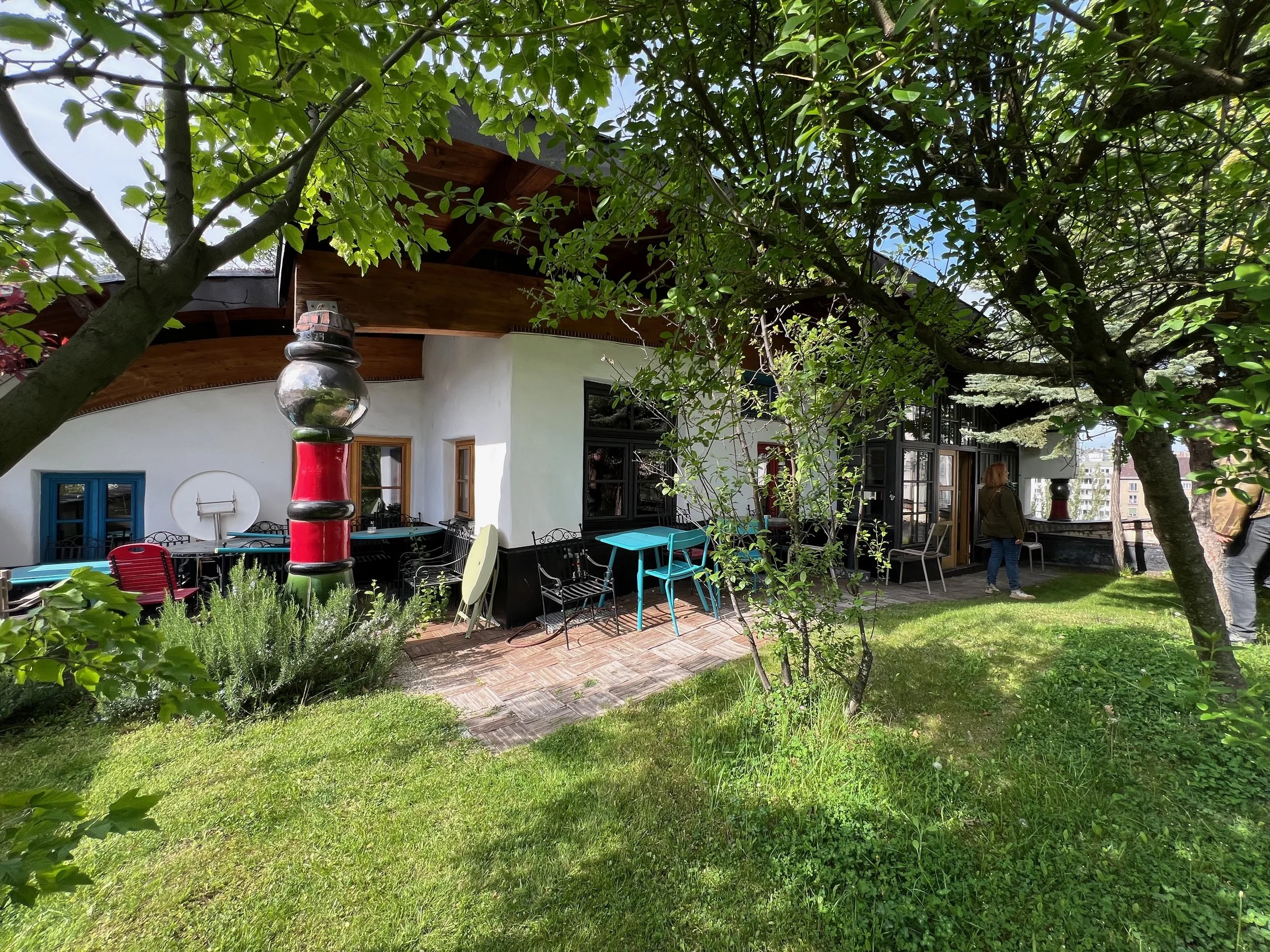
Hundertwasser’s rooftop apartment
Even the building itself seemed like one of his paintings brought to life. The floors were not flat. They rose and dipped beneath my feet, gently refusing the rigid geometry we normally take for granted. Hundertwasser believed that flat floors were suited to machines, not human beings—that our feet, like our eyes and hands, should be allowed to experience the world through touch and movement. He saw uneven floors as a way of restoring our connection to the earth. It struck me that his ideas weren't simply things he painted. They were things he lived.
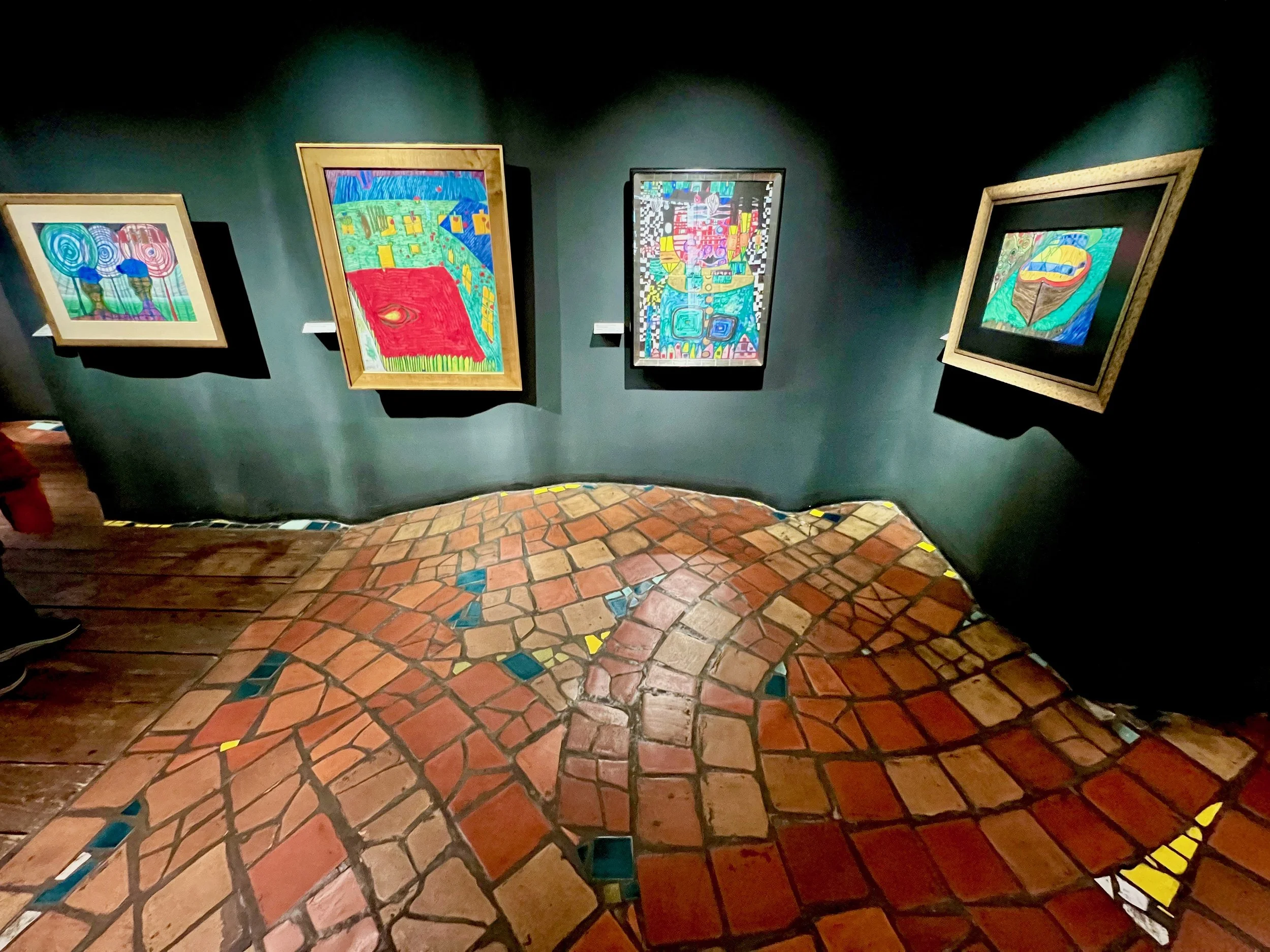
KunstHausWien floors and paintings
He explored painting, printmaking, architecture, and environmental design, continually learning new techniques and drawing inspiration from other cultures, including Japanese woodblock printing. I deeply admire that willingness to remain a student.
There is something wonderful about saying, I don't know how to do this yet. Let me learn.
That is something I try to bring into my own work: the desire to keep experimenting with materials, techniques, textures, and unexpected combinations rather than deciding what my art is supposed to be.
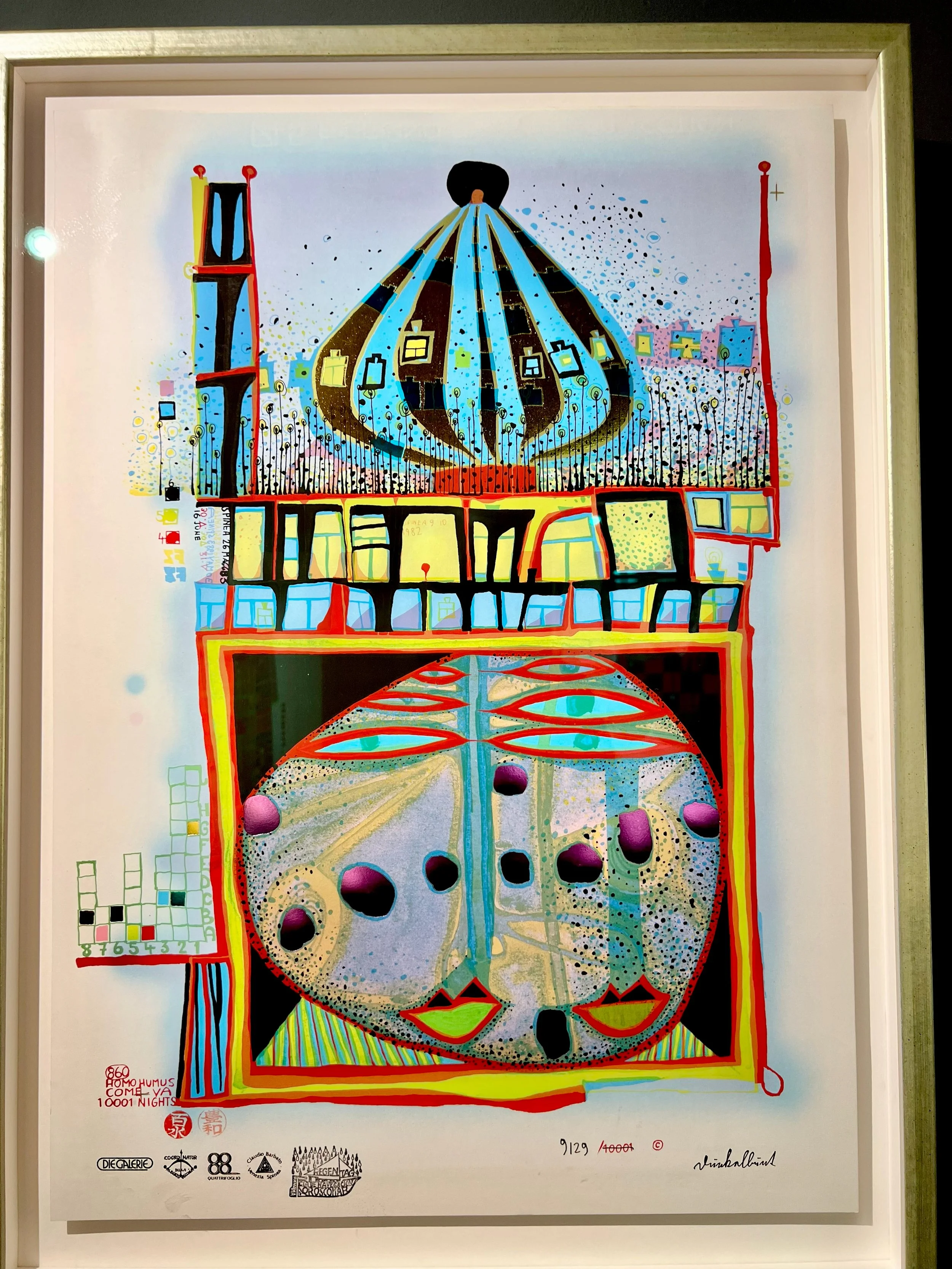
“10002 Nights Homo Humus Come Va How Do You Do,” Friedensreich Hundertwasser
His life also gives his work another dimension. Having experienced the persecution and devastation of the Nazi era, Hundertwasser became deeply committed to individuality, freedom, environmental responsibility, and the dignity of human life. His colorful, playful world was rooted in serious ideas about how we live and how we treat the natural world.
He challenged conventional architecture, imagined buildings that welcomed trees and vegetation, and even explored ways of working with natural processes in areas as ordinary as wastewater treatment.
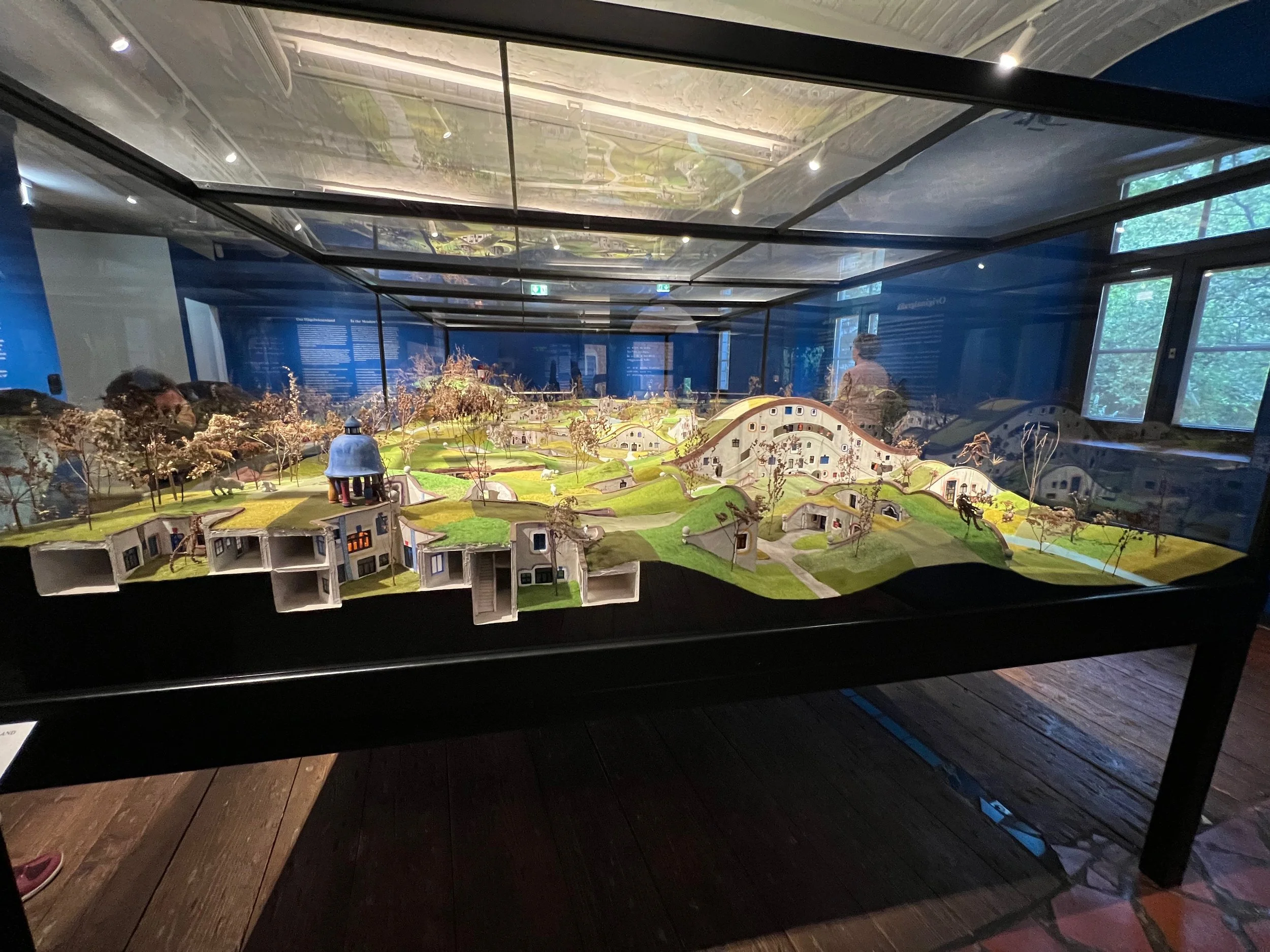
Hundertwasser’s vision of sustainable housing
I love that the same imagination that created exuberant paintings could also be applied to something so practical.
It makes me think that creativity isn't simply about making beautiful things. It is about looking at something everyone else accepts and asking:
What if we imagined it differently?
That question resonates with my own attraction to texture, layers, reclaimed materials, and unexpected combinations. I love taking something overlooked and wondering what it might become.
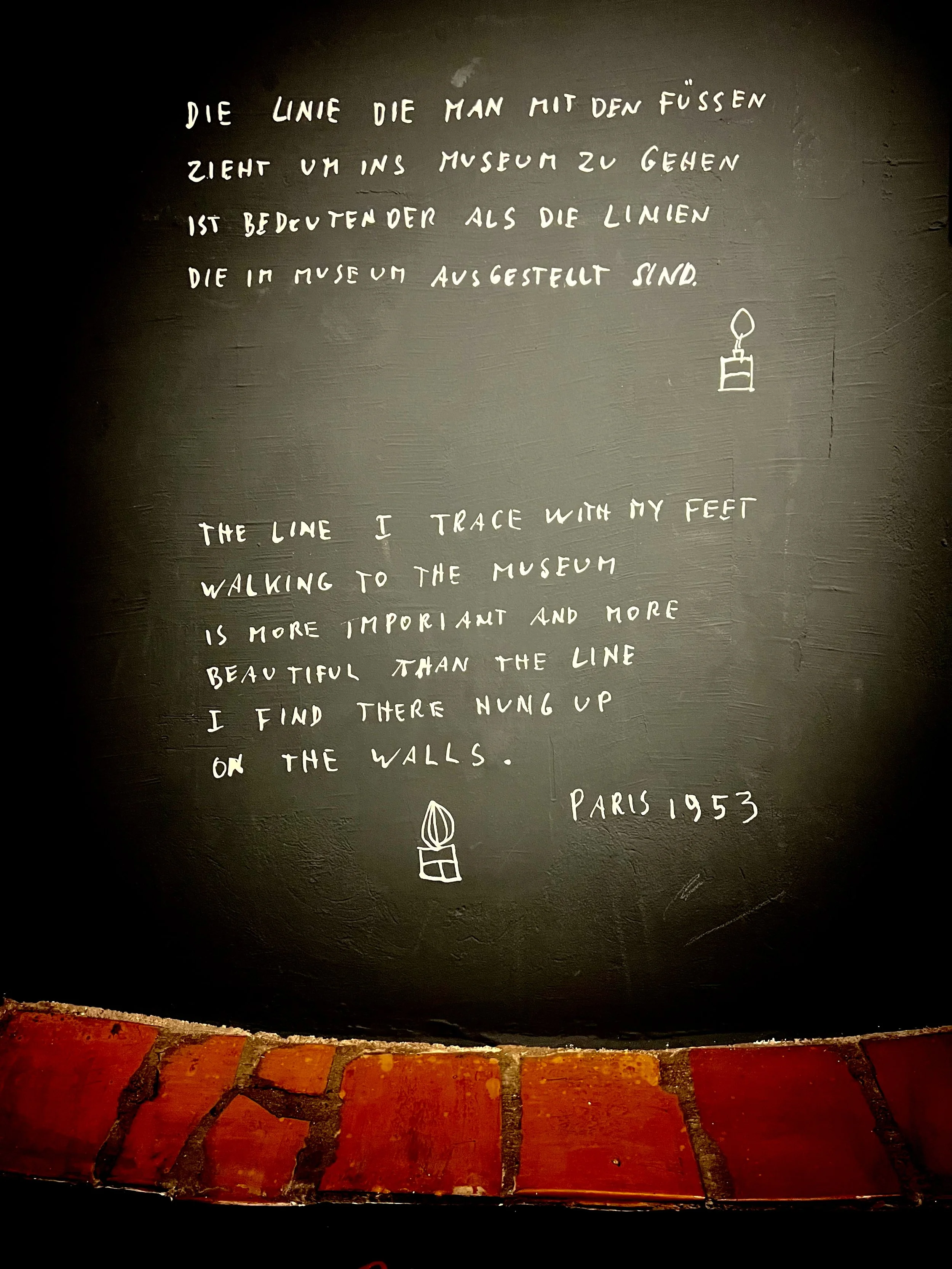
Quote by Hundertwasser
I went to Vienna expecting to see paintings I admired. Instead, I encountered an entire philosophy of living and making. An artist who refused to separate art from life, beauty from responsibility, or imagination from action.
Hundertwasser reminds me that joy and seriousness can exist together. Art can be playful, colorful, and exuberant while still asking important questions about how we live, what we value, and how we care for the world around us.
Most of all, he reminds me to keep experimenting. To follow the strange idea, learn the unfamiliar technique, explore another culture, and remain open to possibilities I haven't yet imagined.
For me, Hundertwasser is a reminder that one of an artist's greatest gifts is the willingness to imagine that things could be otherwise—and the courage to bring that vision into the world.