The Rhythm of the Sea
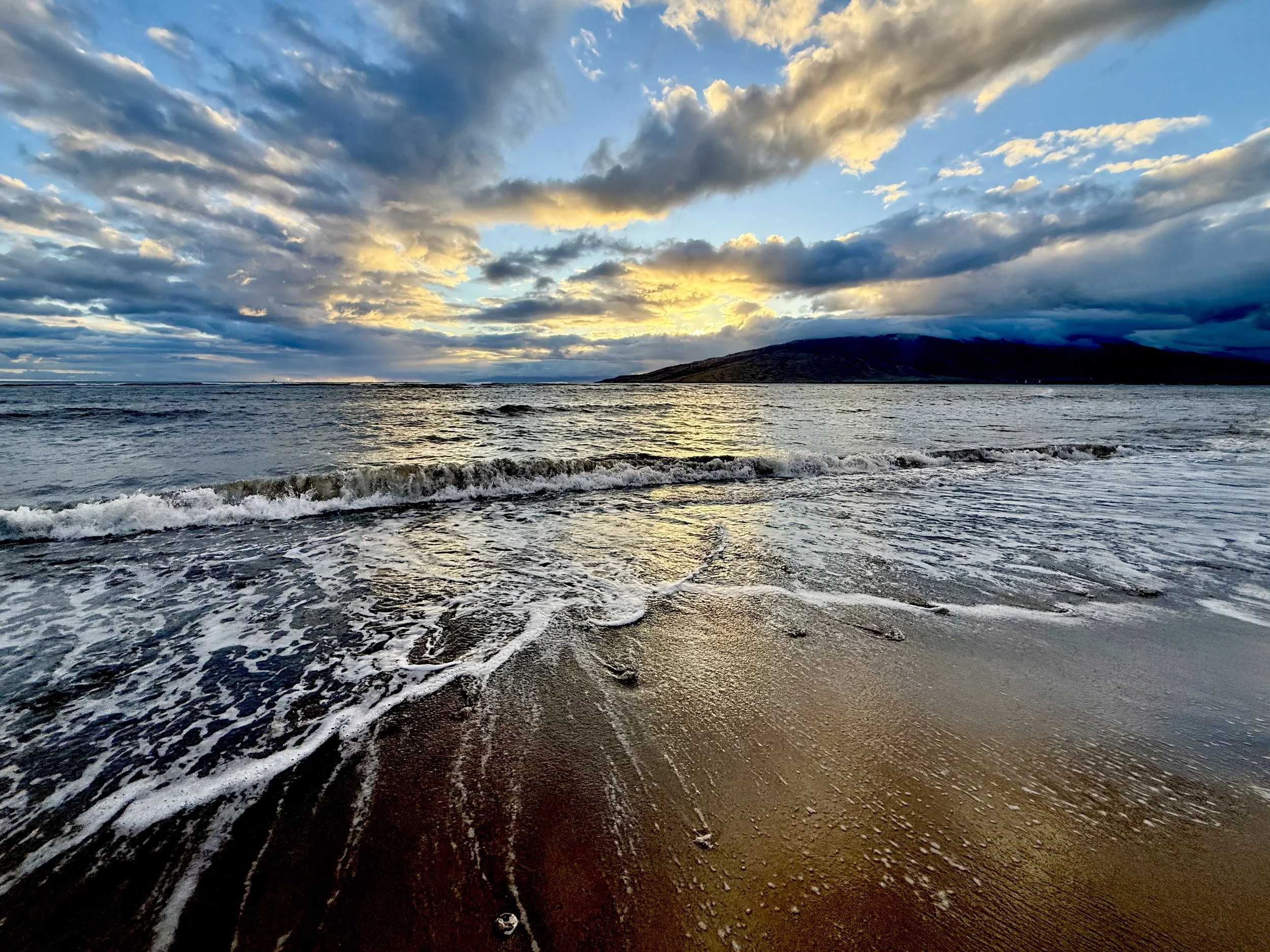
Maui, Hawaiʻi
The ocean is my first love.
It is where I find stillness in motion, peace in the crashing of waves, and a sense of belonging I cannot quite put into words. I can stand at the water’s edge and feel its rhythm move through me—the rise and fall of the waves, the pull of the tides, the endless coming and going.
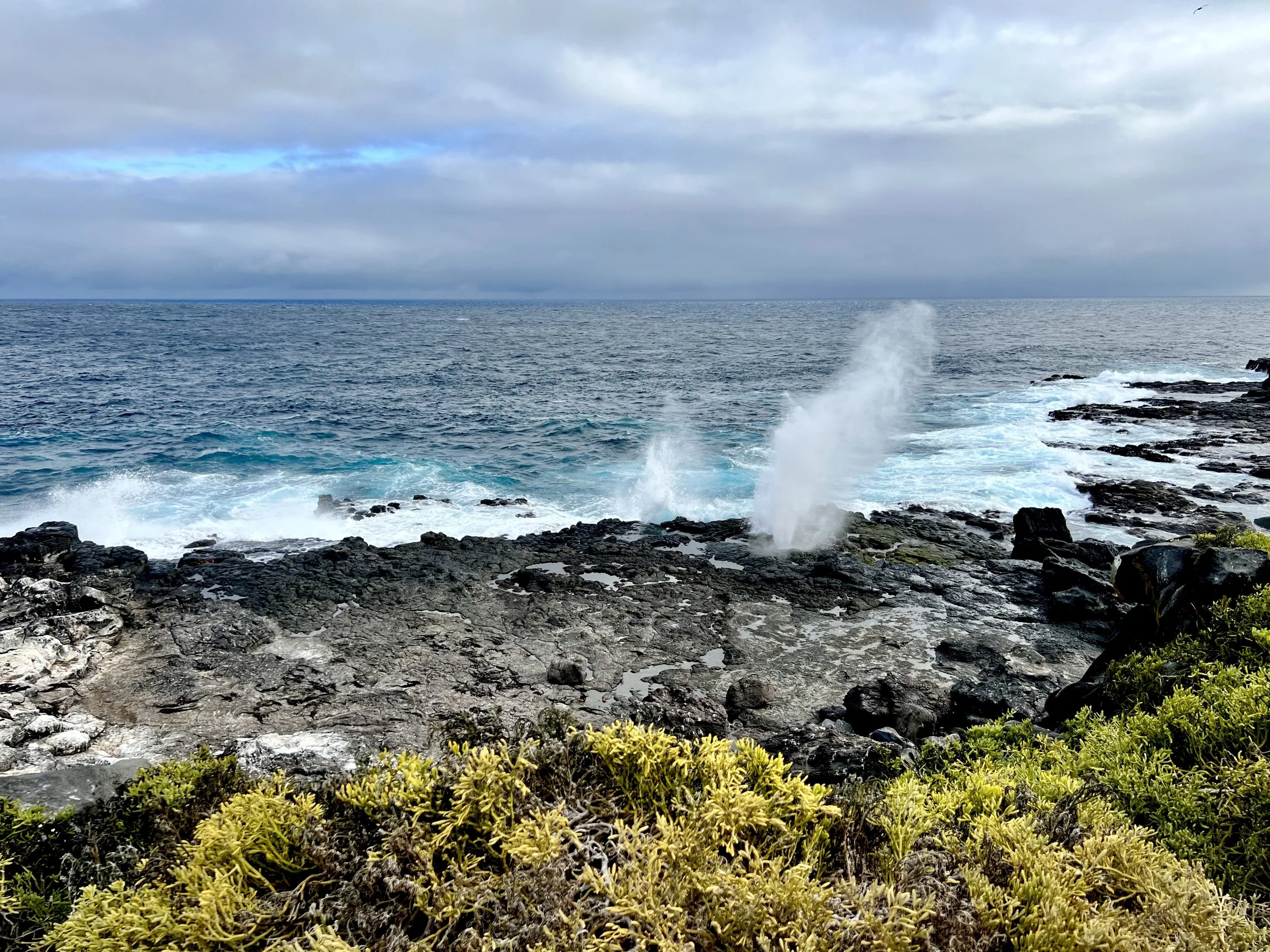
Blowhole, Galapagos Islands
And somehow, within all that movement, there is deep calm.
There is a particular kind of peace I find beside the ocean. Perhaps it is the vastness, or the rhythm, or the feeling of being reminded that my own small concerns are part of something much larger. I can watch the water for a very long time without needing anything from it. It simply moves, and I simply watch.
I am drawn to the language of the water: the deep cobalt and indigo of the open sea, the luminous greens and turquoise of shallow water, the sudden flash of sunlight across a wave, the fleeting white of foam as it gathers, breaks, and disappears.
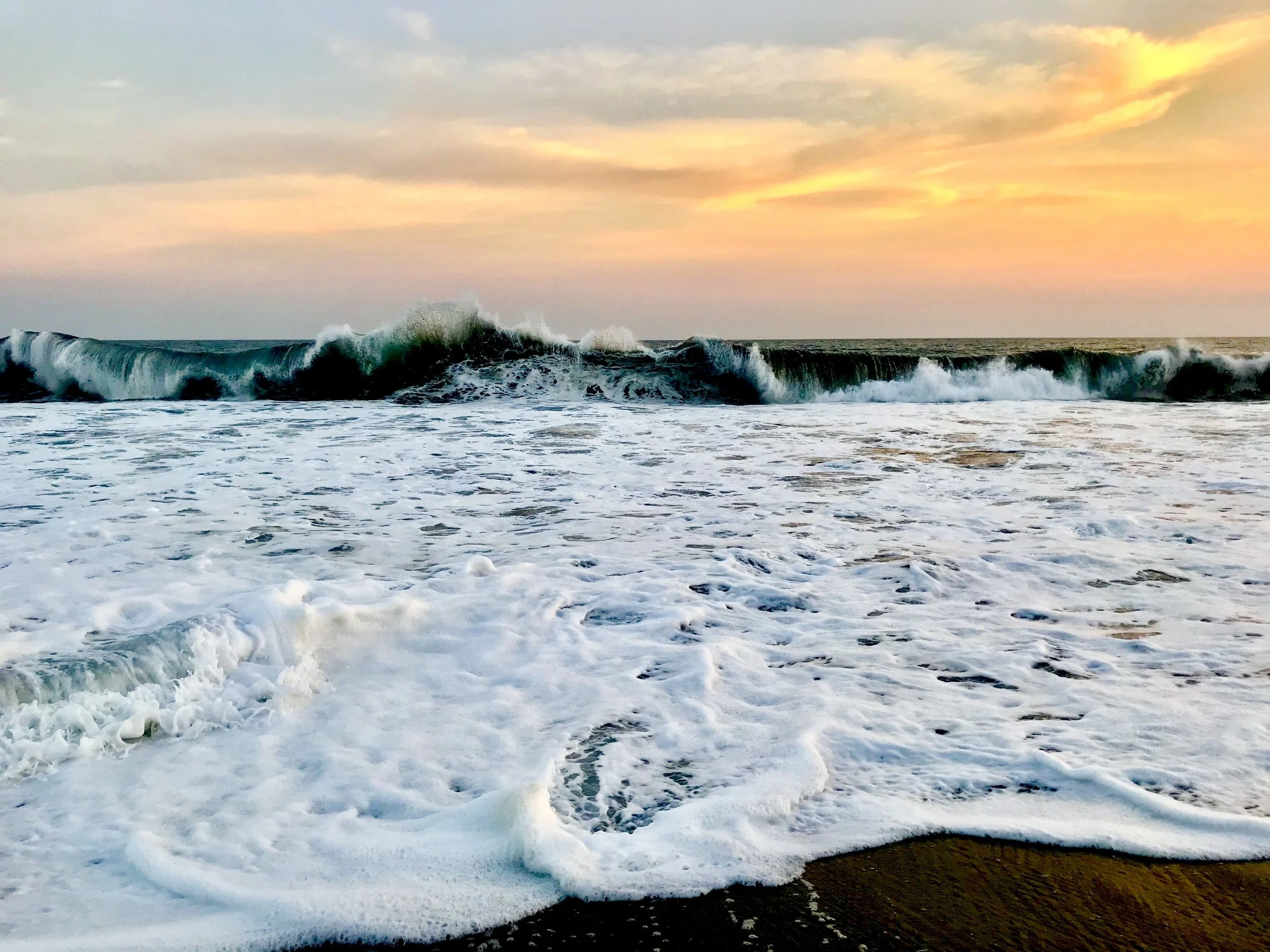
Wave foam in Monterrico, Guatemala
Nothing on the surface stays the same for long. Light, wind, tide, and current are constantly rewriting it. A pattern appears for an instant, then dissolves into another. The ocean is always breaking and reforming, gathering and dispersing, revealing and concealing. Yet below the restless surface are deep waters, hidden landscapes, intricate ecosystems, and currents moving slowly through darkness and light. The sea can be wild at its edges and profoundly peaceful at its depths.
I find something beautiful in that paradox.
As a marine scientist, I have spent years studying the ocean, the ecosystems that inhabit it, and the forces that shape it. The more I have learned, the more I have come to understand that change is not an interruption to nature.
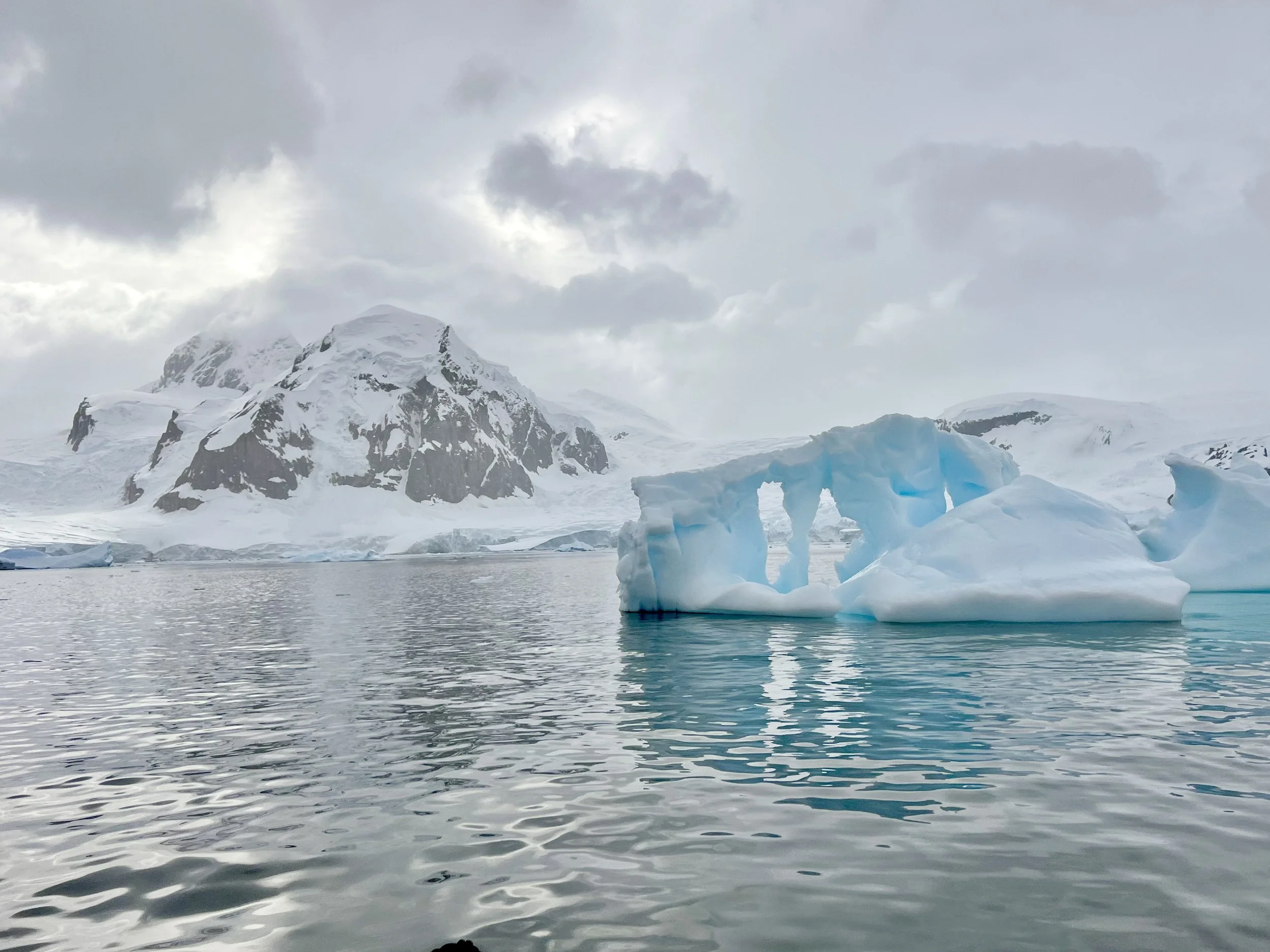
Antarctica glaciers
Change is nature. But so is stillness.
That understanding has found its way into my paintings. Usually I am not trying to paint the ocean literally. I am interested in what it feels like—the movement and stillness, rhythm and silence, fluidity and depth, tension and release.
I introduce water directly into my art process, allowing it to move pigment, soften boundaries, break apart forms, and carry one layer into another. I begin with intention, but leave room for the unexpected. A mark dissolves. A color bleeds. Something disappears, and something else emerges.
I am drawn to that moment of becoming, when something is not yet fully formed, when one thing is dissolving into another and the outcome is still uncertain.
But I am equally drawn to the moments when everything becomes quiet.
A painting needs places for the eye to rest—areas where nothing is demanding attention. Like the sea, the work needs both movement and stillness: the crashing wave and the deep water beneath it. Perhaps that is what I am searching for when I paint: the stillness that can exist within movement.
I hope my paintings hold something of that essence—not necessarily an image of the sea, but something of its spirit: its restlessness and its calm, its vastness and its depth, its capacity to transform and its invitation to be still.
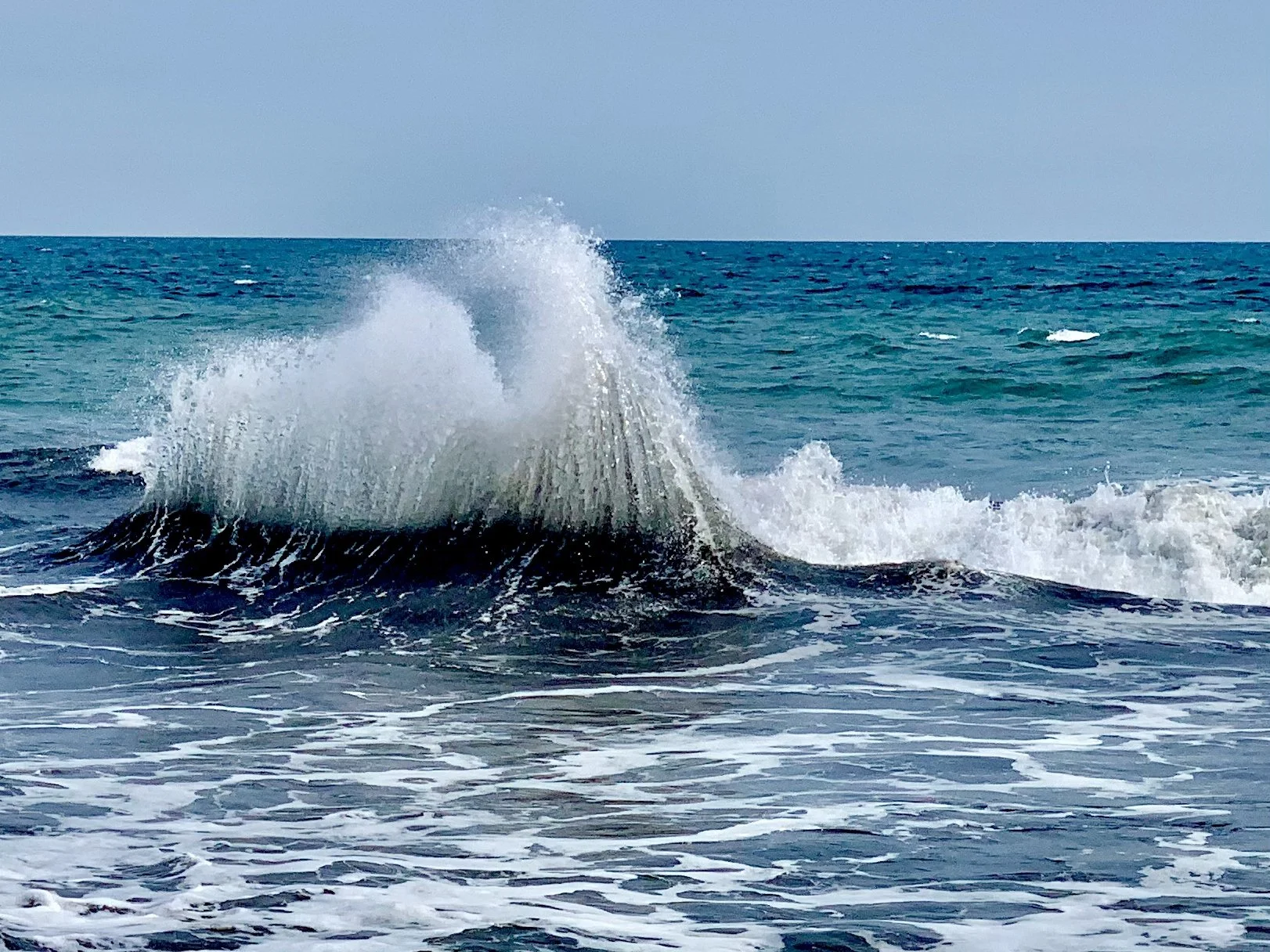
Tall sea wave
The sea has taught me to loosen my grip, to trust what I cannot control, and to remain open to what emerges.
The sea reminds me that peace is not the absence of movement.
It is the quiet place we discover within it.