The Language of Circles
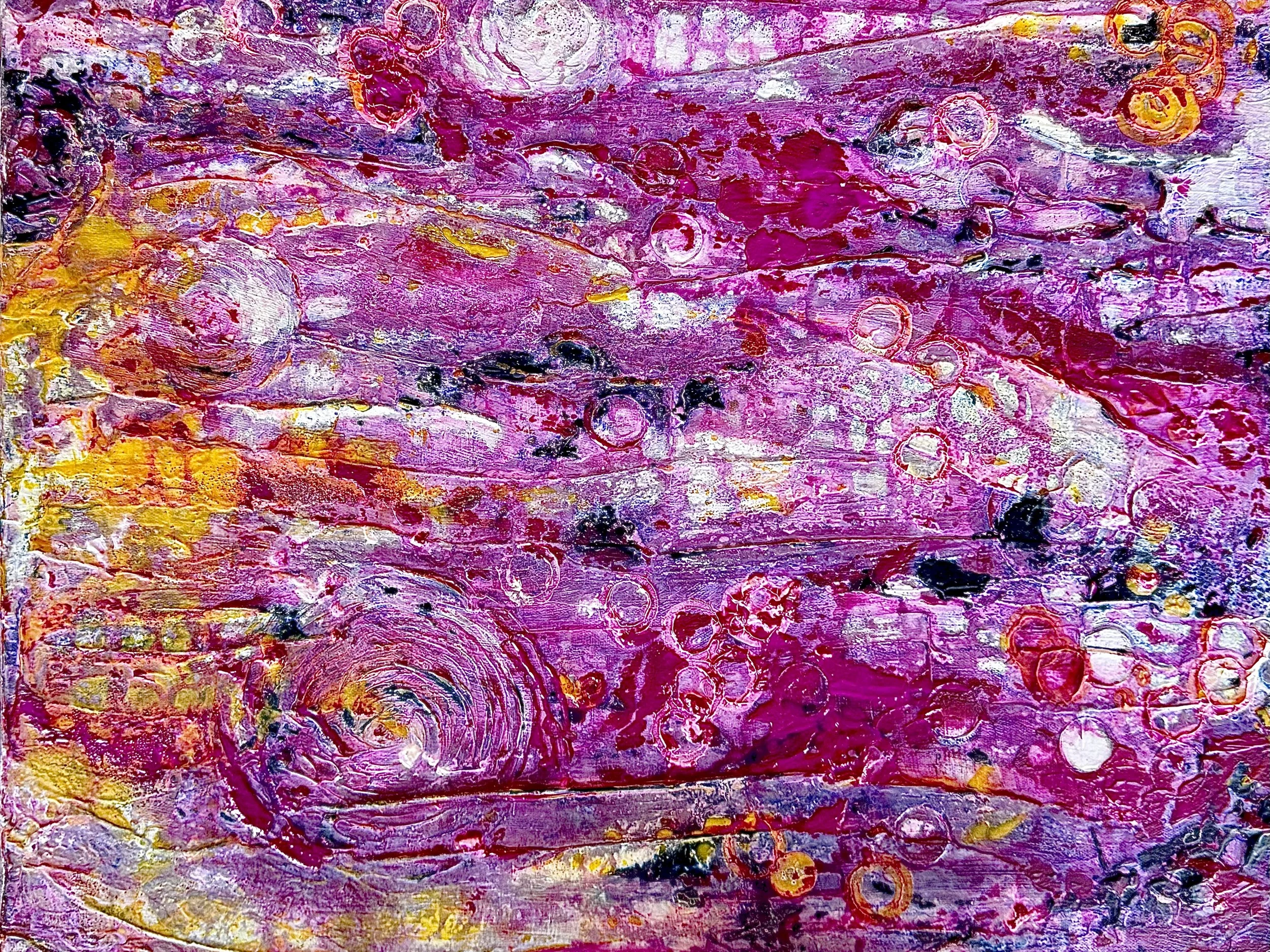
“When I Close My Eyes”
I love circles.
There is something about them that feels both ancient and immediate. A circle represents wholeness, unity, and infinity. It has no beginning and no end. Every point along its edge exists in relationship to the center, creating a sense of balance and completeness.
And yet, within that perfect form, there is movement.
A circle contains energy without confining it. It can suggest something turning, expanding, returning, beginning again. It holds the possibility of a journey that has no fixed starting point and no final destination.
Perhaps that is why I find circles so compelling.
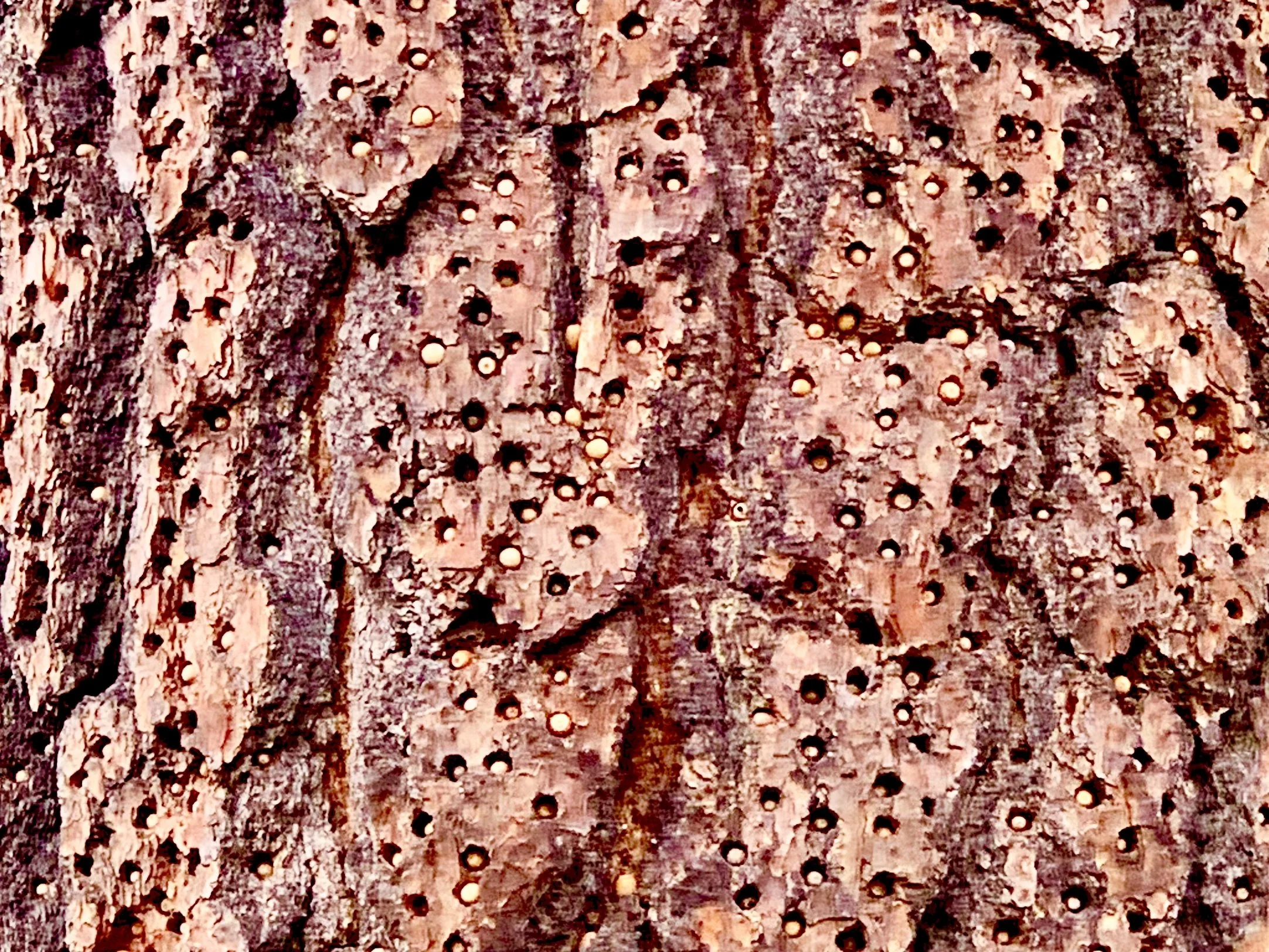
Woodpecker holes and acorns
They are everywhere—planetary orbits, rings of a tree, ripples spreading across water. Even at atomic scales we cannot see, circular forms appear again and again. Nature seems to return to the circle as though it is one of its most essential ways of expressing order, growth, and connection.
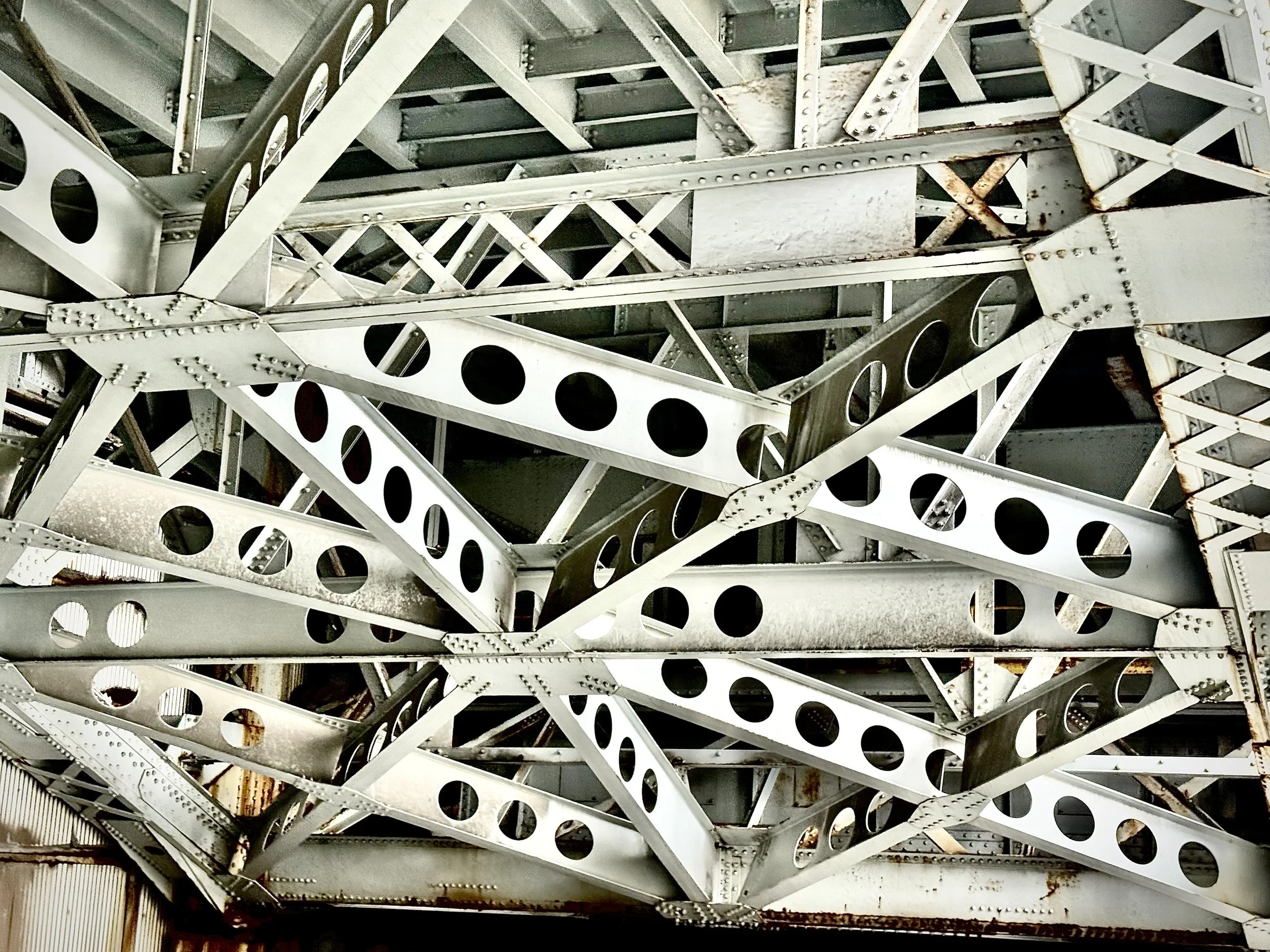
Support beams
Circles also carry a long history of symbolic meaning. Across cultures and spiritual traditions, they have represented eternity, wholeness, unity, protection, and the cycles of life.
For me, they have become part of the visual language of my paintings.
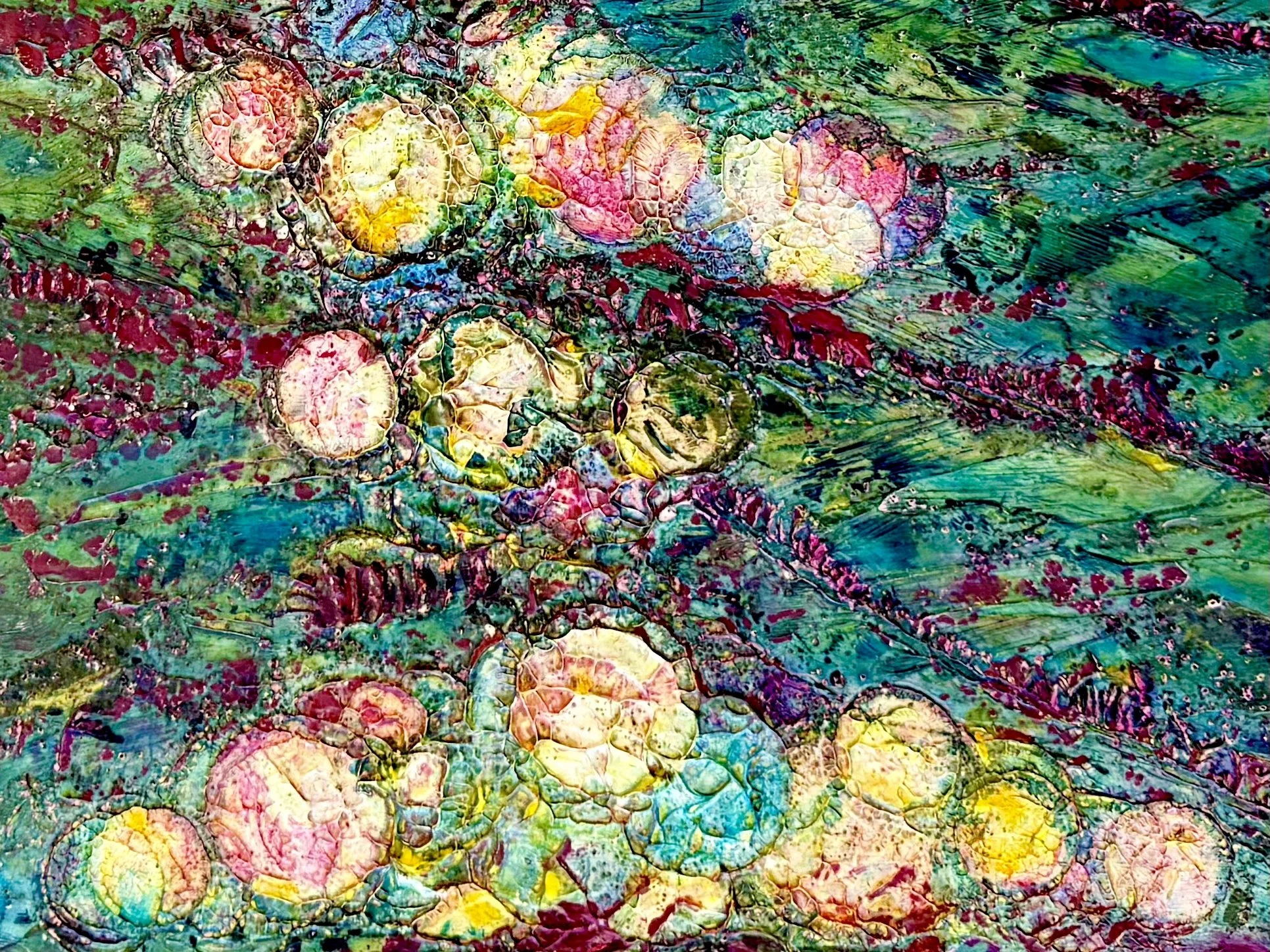
“When Garden Explodes”
But I rarely make them perfect.
Instead, my circles overlap, intersect, gather, and drift. Some are bold and distinct; others are barely visible beneath layers of paint. Together, they create a kind of beautiful, contained chaos. Where they meet, new shapes emerge, and the eye begins to move around the painting, following one form into another.
Sometimes a circle becomes a portal—a window into another layer. An earlier color or texture might peek through, offering a glimpse of what was there before. I love that a circle can both contain something and open something.
That idea mirrors the way I paint. I add, cover, scratch, sand, reveal, and conceal. Layers disappear and reappear. What seems finished may be changed, only to have something unexpected emerge from underneath.
The circle fits naturally into this process. It holds a fragment of the past while creating an opening into something new.
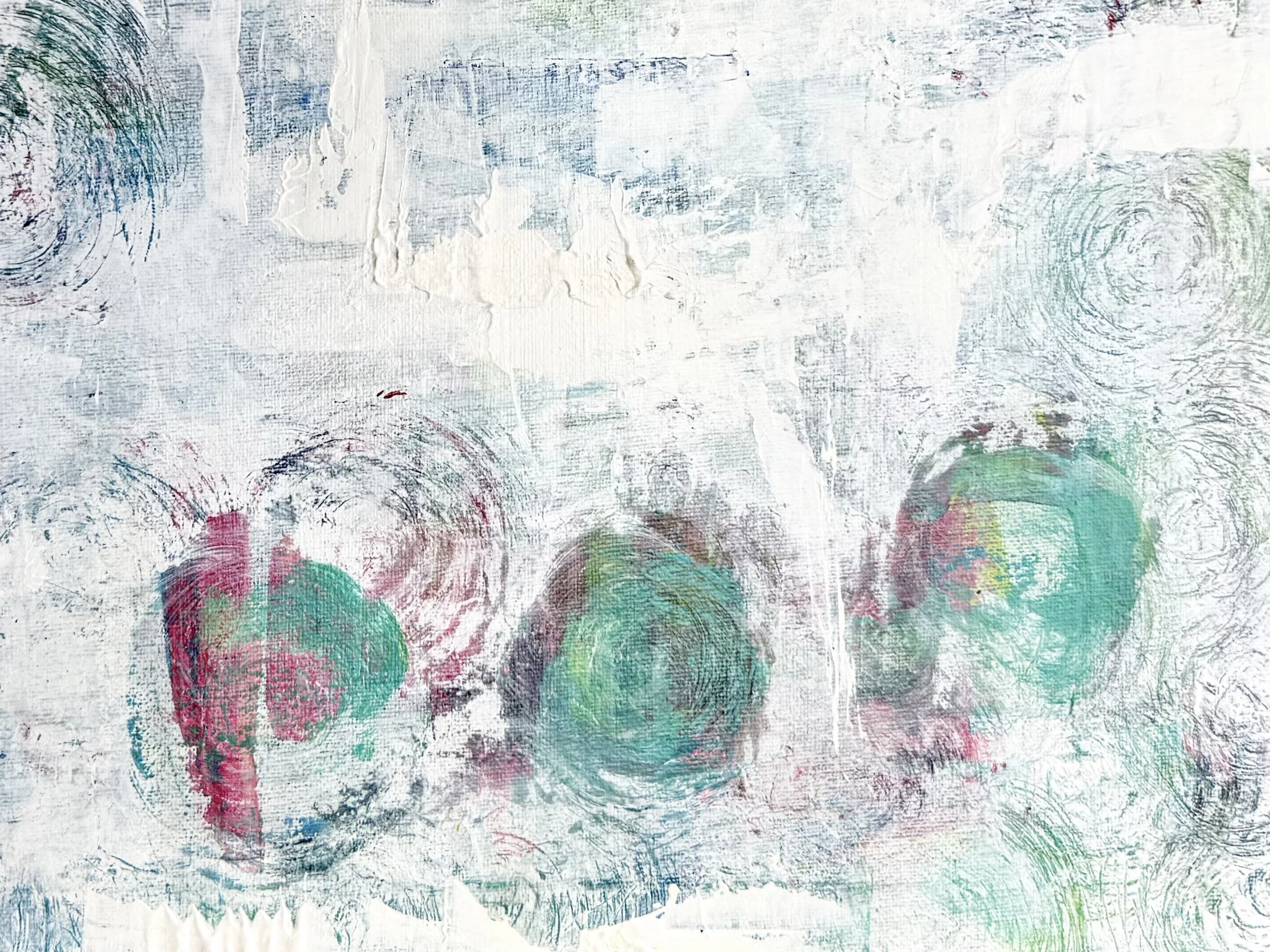
“Triplets”
For me, circles hold a tension I love: they are contained yet expansive, balanced yet full of movement, complete yet always becoming.
Maybe that is why I keep returning to them.
A circle reminds me that wholeness isn't about being finished. It's about continuing to move, change, connect, and begin again.